Complete Guide to Buying Your First Bike or Scooter in India
Should You Buy a Bike or Scooter?
The first decision is whether a motorcycle or scooter makes more sense for your lifestyle.
Neither is automatically better. Your daily commute, riding experience, road conditions and personal preferences should determine your choice.
A scooter may be suitable if you:
- Mostly ride within the city
- Spend a lot of time in stop-and-go traffic
- Prefer an automatic transmission
- Want easy low-speed handling
- Need convenient under-seat storage
- Want a practical vehicle for everyday errands
- Expect other family members to use the vehicle
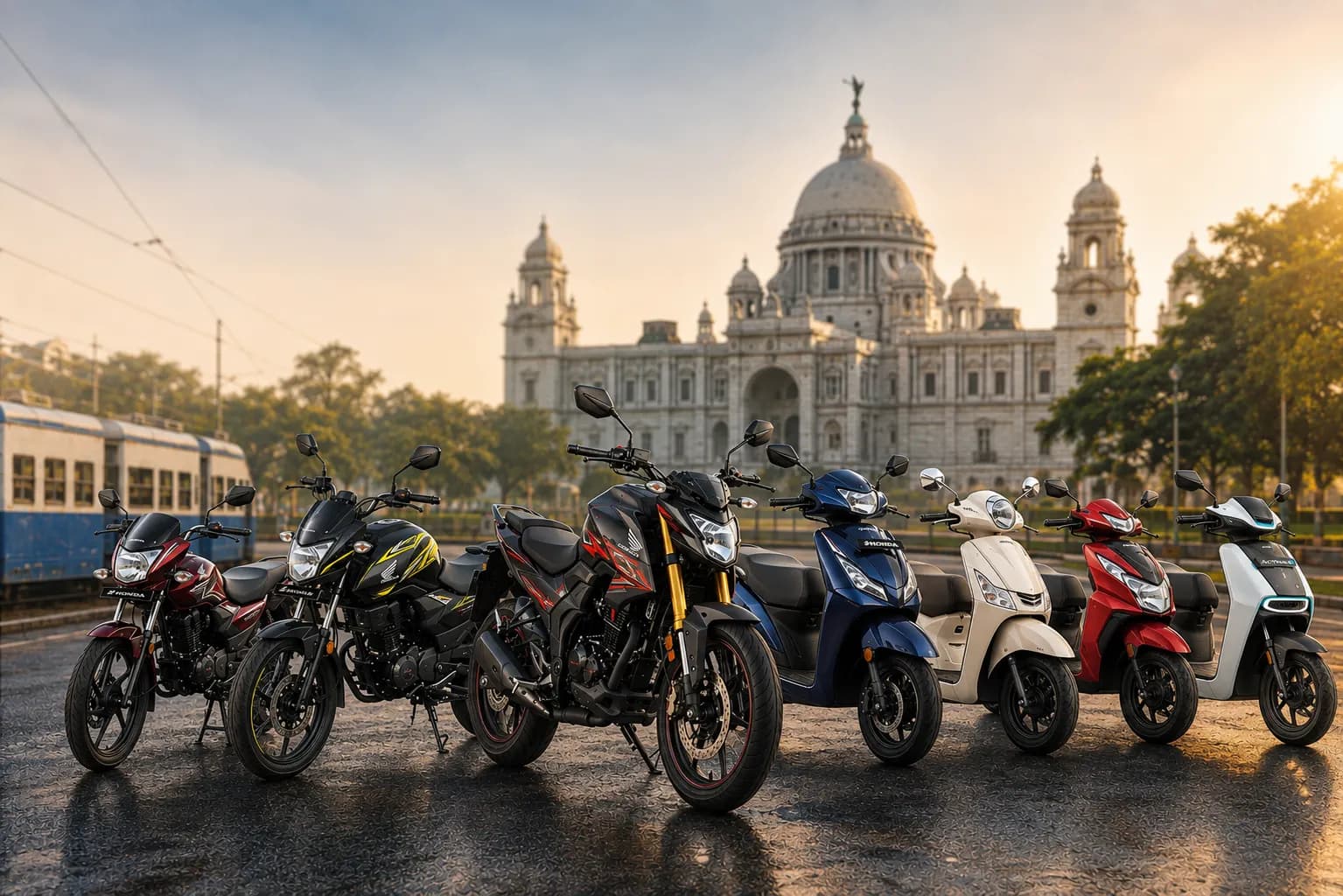
If you are considering a scooter for your first two-wheeler, you can explore the range of Honda scooters available at Todi Honda and compare the models based on your requirements.
A motorcycle may be suitable if you:
- Regularly travel longer distances
- Prefer a manual gearbox
- Enjoy a more involved riding experience
- Expect to use your two-wheeler on highways
- Prefer the riding position of a motorcycle
- Want a vehicle that suits both city and longer rides
You can explore the range of Honda motorcycles to see which models may suit your riding needs.
If you are a complete beginner, an automatic scooter can be easier to learn because you do not have to coordinate a clutch and gear changes while learning to balance, brake and manage traffic.
However, that does not mean a motorcycle is unsuitable for beginners. With proper instruction and practice, a new rider can learn to ride a motorcycle comfortably.
The important thing is to choose a vehicle that matches how you expect to ride.
Decide Your Budget Before Choosing a Model
It is easy to start browsing models based on their advertised price. Before you shortlist anything, decide how much you are actually comfortable spending.
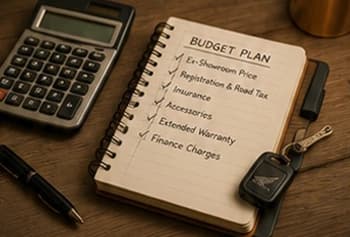
The price displayed for a two-wheeler may be the ex-showroom price, while the amount you pay to get the vehicle legally on the road can be higher.
Your on-road cost can include:
- Ex-showroom price
- Registration and road tax
- Insurance
- Accessories
- Extended warranty, if applicable
- Finance-related charges, if you take a loan
You should also account for the ongoing cost of ownership.
This can include:
- Fuel
- Regular servicing
- Insurance renewals
- Tyres
- Battery
- Other consumables and repairs
If you are planning to finance your first two-wheeler, look beyond the EMI. A lower monthly payment can sometimes mean a longer loan period and a higher total repayment.
Set a realistic budget first. Then compare the models that fit within it.
Think About How You Will Use Your Two-Wheeler
The best two-wheeler for one person may not be the right choice for another.
Before comparing specifications, think about your everyday riding.
Ask yourself:
- How many kilometres will I travel each day?
- Will I mainly ride in city traffic?
- Will I regularly travel on highways?
- Will I frequently carry a pillion?
- Will I use the vehicle for work?
- Do I need storage space?
- Will other members of my family ride it?
- How important is fuel efficiency to me?
- Do I need a lightweight vehicle for easy parking and manoeuvring?
For example, someone travelling a short distance through busy city roads may value easy handling and storage more than outright performance.
Someone who regularly travels longer distances may place greater importance on seating comfort, stability, braking and overall riding position.
Understanding your usage will make the rest of the buying decision much easier.
What Specifications Should You Check?
Two-wheeler specifications can seem complicated when you are buying your first vehicle. You do not need to understand every technical detail.
Focus on the specifications that have a direct impact on your comfort, safety and everyday riding.
Seat Height
Seat height affects how easily you can get on and off the vehicle and how confidently you can support it when stopped.
You do not necessarily need to place both feet completely flat on the ground. What matters is that you can comfortably balance the vehicle and feel in control at low speeds and when stopping.
Kerb Weight
Kerb weight refers to the weight of the vehicle in its ready-to-ride condition.
A lighter vehicle can generally feel easier to manoeuvre when you are learning, especially while parking or making slow-speed turns.
However, weight should not be considered in isolation. The balance and weight distribution of a vehicle can also affect how it feels to ride.
Ground Clearance
Ground clearance is the distance between the lowest part of the vehicle and the road.
It matters when you encounter speed breakers, potholes and uneven roads. If your daily route includes poorly maintained roads, adequate ground clearance can make everyday riding more comfortable.
Engine Capacity
Engine capacity is generally measured in cubic centimetres, or cc. A higher engine capacity does not automatically make a two-wheeler better for you.
For a first-time buyer, consider how much performance you actually need. If your riding is mainly within the city, smooth performance and efficiency may be more useful than choosing a vehicle simply because it has a larger engine.
Mileage and Fuel Efficiency
Fuel efficiency can have a significant impact on your monthly running costs, particularly if you commute every day.
Claimed mileage figures are useful for comparison, but actual efficiency can vary depending on traffic, riding style, road conditions, load and maintenance.
Think about your expected daily distance rather than focusing only on the highest mileage number.
Braking System
Braking is one of the most important safety considerations when choosing a two-wheeler.
Depending on the model and variant, you may come across technologies such as ABS and CBS.
ABS is designed to help prevent wheel lock during hard braking, while CBS helps distribute braking force between the wheels.
More importantly, understand the braking system on the specific vehicle you are considering and learn to brake progressively and safely.
Storage and Practical Features
Storage can make a significant difference to everyday convenience, particularly with scooters.
Check whether the available storage is sufficient for the things you normally carry.
Also consider practical features such as:
- USB charging
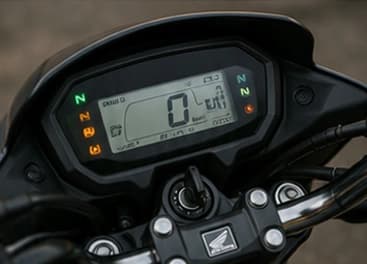
- Digital or connected displays
- External fuel filling
- Keyless features
- Side-stand related safety features
- Lighting
- Luggage or accessory options
Features are useful when they solve a real problem. Do not choose a higher variant simply because it has more features.
Take a Test Ride Before You Buy
A test ride is one of the most important parts of buying your first two-wheeler. You can read specifications and reviews, but you cannot know how a vehicle feels until you ride it.
During your test ride, pay attention to:
- How easily you can get on and off
- Whether the seat feels comfortable
- Whether the vehicle feels manageable at low speeds
- Whether you can comfortably reach the controls
- How easy it is to make a U-turn
- Whether the handlebar position feels natural
- Whether you can see clearly through the mirrors
- How the brakes feel
- How the suspension feels over uneven surfaces
- Whether the vehicle feels stable and comfortable
If possible, do not rush the decision after a very short ride. Your first two-wheeler should feel manageable rather than intimidating.
If you are considering a Honda, visiting Todi Honda gives you the opportunity to explore the available models and discuss your requirements before making a decision.
Compare Variants Before Making a Decision
Once you have shortlisted a model, check whether it is available in multiple variants.
Different variants may offer differences in:
- Braking technology
- Wheels and tyres
- Instrument cluster
- Lighting
- Connected features
- Security features
- Convenience features
- Accessories
Compare the additional cost with the features you are actually getting.
A higher variant is not automatically the best value. If a particular feature is not useful to you, there may be little reason to pay extra for it.
Understand the On-Road Price
One of the most common mistakes first-time buyers make is comparing only ex-showroom prices.
The on-road price can include the costs required to register and insure the vehicle.
Before making a purchase, ask the dealership for a complete price breakup.
You should understand:
- Ex-showroom price
- Registration charges
- Road tax
- Insurance
- Optional accessories
- Extended warranty, if applicable
- Finance charges, if applicable
Having the complete cost in front of you makes it easier to compare different models fairly.
What Documents Are Needed to Buy a Two-Wheeler?
The documents required can vary depending on the purchase and whether you are financing the vehicle.
Generally, you may need identity and address proof, along with other documents required for registration or financing.
Before completing the purchase, make sure you receive and understand the important vehicle documents, including:
- Purchase invoice
- Insurance policy
- Registration details
- Warranty information
- Owner's manual
- Service information
- Finance documents, if applicable
If you are unsure about any document or charge, ask the dealership team to explain it before completing the purchase.
What Should You Check Before Taking Delivery?
Getting your first two-wheeler is exciting, but take a few minutes to inspect it before leaving the showroom.
Check:
- Vehicle identification number
- Engine number, where applicable
- Odometer reading
- Tyres
- Brakes
- Headlight and tail light
- Indicators
- Horn
- Mirrors
- Fuel or battery level
- Owner's manual
- Insurance documents
- Warranty information
- Registration details
- Accessories you have purchased
Ask the showroom team to explain the basic controls before you leave.
You should know how to operate the lights, indicators, horn, ignition and other important controls.
Also ask about the recommended running-in procedure and the first service schedule.
What Safety Gear Should a First-Time Rider Buy?
Your two-wheeler does not provide the physical protection that a car does, so protective gear is important.
Helmet
A properly fitted, certified helmet should be your first priority. Choose one that fits securely and does not move around when you turn or shake your head.
Riding Gloves
Gloves can improve grip and provide protection for your hands in the event of a fall.
Riding Jacket
A riding jacket can provide protection from abrasion and weather. If you ride regularly, choose one that is comfortable enough to wear consistently.
Knee Protection
Knee guards or protective riding trousers can provide additional protection, particularly for longer rides.
Rain Gear
A proper rain jacket, poncho or two-piece rain suit is useful if you regularly ride during the monsoon.
You do not need to buy every piece of equipment on your first day. Start with a good helmet and add other protective gear based on your riding needs.
Common Mistakes New Riders Should Avoid
The first few weeks of riding are when you build habits that can stay with you for years.
Some common mistakes include:
Following too closely
Leave enough distance between your vehicle and the one ahead so that you have time to react.
Braking abruptly
Avoid sudden braking wherever possible. Learn to use the braking system progressively and maintain control.
Ignoring mirrors
Make checking your mirrors a regular part of riding, particularly before changing direction or road position.
Focusing on an obstacle
New riders can sometimes stare at an obstacle they are trying to avoid. Maintain awareness of your surroundings and focus on the path you want to take.
Wearing unsuitable footwear
Avoid loose footwear that can slip off easily. Wear shoes that provide a secure grip and protect your feet.
Ignoring tyre pressure
Incorrect tyre pressure can affect handling, comfort and efficiency. Check the recommended tyre pressure regularly.
Riding beyond your experience level
There is no need to immediately ride in heavy traffic or take long trips. Start with quieter roads and gradually build your confidence.
Do Not Forget About After-Sales Service
A two-wheeler is not a one-time purchase. Regular maintenance is important for keeping the vehicle reliable and safe to ride.
Before buying, check:
- Where the nearest authorised service centre is
- Recommended service intervals
- Warranty terms
- Availability of genuine parts
- Typical maintenance requirements
- Roadside assistance, if available
Having convenient access to an authorised service centre can make ownership much easier, particularly when you depend on your two-wheeler for your daily commute.
When your vehicle needs maintenance, an authorised Honda service centre can help with regular servicing, genuine spare parts and other ownership requirements.
Should You Buy a New or Used Two-Wheeler?
A new two-wheeler gives you the benefit of a new vehicle, manufacturer's warranty and a known ownership history.
A used two-wheeler can cost less upfront, but you need to pay closer attention to its condition and history.
If you are considering a used vehicle, check:
- Vehicle age
- Number of previous owners
- Service history
- Accident history
- Tyre condition
- Brake condition
- Engine performance
- Chassis condition
- Registration documents
- Outstanding finance or other issues
If you do not have much experience evaluating used vehicles, getting professional assistance can help you make a more informed decision.
Choosing Your First Honda Two-Wheeler
The first few weeks of riding are when you build habits that can stay with you for years.
Some common mistakes include:
Following too closely
Leave enough distance between your vehicle and the one ahead so that you have time to react.
Braking abruptly
Avoid sudden braking wherever possible. Learn to use the braking system progressively and maintain control.
Ignoring mirrors
Make checking your mirrors a regular part of riding, particularly before changing direction or road position.
Focusing on an obstacle
New riders can sometimes stare at an obstacle they are trying to avoid. Maintain awareness of your surroundings and focus on the path you want to take.
Wearing unsuitable footwear
Avoid loose footwear that can slip off easily. Wear shoes that provide a secure grip and protect your feet.
Ignoring tyre pressure
Incorrect tyre pressure can affect handling, comfort and efficiency. Check the recommended tyre pressure regularly.
Riding beyond your experience level
There is no need to immediately ride in heavy traffic or take long trips. Start with quieter roads and gradually build your confidence.
Do Not Forget About After-Sales Service
A two-wheeler is not a one-time purchase. Regular maintenance is important for keeping the vehicle reliable and safe to ride.
Before buying, check:
- Where the nearest authorised service centre is
- Recommended service intervals
- Warranty terms
- Availability of genuine parts
- Typical maintenance requirements
- Roadside assistance, if available
Having convenient access to an authorised service centre can make ownership much easier, particularly when you depend on your two-wheeler for your daily commute.
When your vehicle needs maintenance, an authorised Honda service centre can help with regular servicing, genuine spare parts and other ownership requirements.
Should You Buy a New or Used Two-Wheeler?
A new two-wheeler gives you the benefit of a new vehicle, manufacturer's warranty and a known ownership history.
A used two-wheeler can cost less upfront, but you need to pay closer attention to its condition and history.
If you are considering a used vehicle, check:
- Vehicle age
- Number of previous owners
- Service history
- Accident history
- Tyre condition
- Brake condition
- Engine performance
- Chassis condition
- Registration documents
- Outstanding finance or other issues
If you do not have much experience evaluating used vehicles, getting professional assistance can help you make a more informed decision.